







> about_me> tech_set

whoami

Amit Kumar

Software Developer, Web & Mobile Apps

I build workforce platforms end to end — React on the web, React Native and Kotlin on mobile, Rust on the desktop, and the Node.js services and real-time systems behind them.

Open to full-time rolesNew Delhi, India

cat about.md

About Me

I'm a software developer at Razor Infotech, working on Human Maximizer — the company's HRMS product, sold to businesses on subscription and competing with greytHR, Keka and Zoho People. I've built across its React web app, React Native mobile app, Rust desktop agent and native Kotlin apps, and single-handedly built four of those apps, three of them live on Google Play. As a freelancer I built and run Margo GPS, a live fleet-tracking platform with 5,000+ users and 1M+ location updates a day. I came to engineering from a business degree and a year in IT support, so I judge a feature by how it behaves on a customer's worst day.

  • 3+ Years Experience

  • 4 Apps Built Single-handedly

  • 3 Apps Live on Google Play

  • 1M+ GPS Updates a Day

location:
New Delhi, India
role:
Software Developer, Razor Infotech
languages:
English, Hindi
status:
Open to full-time roles

ls ~/stack

Tech Set

The languages, frameworks and tools I use across web, mobile and desktop, and the real-time systems behind them.

Web

  • React
  • Next.js
  • TypeScript
  • JavaScript
  • Tailwind CSS
  • Redux

Backend & real-time

  • Node.js
  • Express
  • MongoDB
  • MySQL
  • Socket.IO
  • WebRTC

Mobile & native

  • React Native
  • Expo
  • Kotlin
  • Jetpack Compose
  • Android
  • Rust

Tools & services

  • Git
  • GitHub
  • Postman
  • Docker
  • Firebase
  • Razorpay

Languages

  • JavaScript (ES6+)
  • TypeScript
  • Kotlin
  • Rust
  • HTML5
  • CSS3

Frontend

  • React
  • Next.js
  • Redux Toolkit
  • TanStack Query
  • Zustand
  • Tailwind CSS
  • Responsive UI

Backend & Real-time

  • Node.js
  • Express
  • REST APIs
  • Socket.IO
  • WebRTC
  • TCP Servers
  • JWT Auth
  • Role-Based Access

Mobile & Native

  • React Native
  • Expo (EAS)
  • Kotlin
  • Jetpack Compose
  • Room
  • ML Kit
  • Rust Desktop Agents
  • Google Play & App Store Releases

Databases

  • MongoDB
  • Mongoose
  • MySQL
  • SQLite

Maps, Payments & Messaging

  • Google Maps
  • Leaflet
  • Geofencing
  • Turf.js
  • Razorpay
  • FCM & APNs Push

Tools

  • Git
  • GitHub
  • Postman
  • Docker
  • Vercel
  • Netlify
  • Agile / Scrum

cat experience.log

Experience

Building Human Maximizer at Razor Infotech — payroll, the core modules and four of its apps as the sole developer — plus the roles that got me here.

01 / current role

Razor Infotech

Software Developer · New Delhi

toPresent

  1. Human Maximizer — HRMS Platform

    • React
    • Node.js
    • Express
    • MongoDB
    • Tailwind CSS
    • Socket.IO
    • WebRTC
    • Built the payroll module as the sole developer against statutory payroll rules, covering TDS, PF and ESIC calculations with audit trails behind every figure.
    • Built core HRMS modules in the MERN stack and Tailwind CSS — employee profiles, attendance, leave and ticketing, company settings, and POSH case management.
    • Implemented a WhatsApp-style chat with real-time messaging and one-to-one voice and video calling over WebRTC.
    • Built an internal company feed in the style of X/Twitter, with live updates over Socket.IO.
    • Added GPS-geofenced attendance with a configurable radius per company (for example, 100 m from the office), used for field staff who never see a desk.
    • Kept the backend modular and the APIs maintainable as the module count grew, with a focus on query and payload cost.
  2. HM Mobile — React Native App

    • React Native
    • Android
    • iOS
    • Owned the companion mobile app for Android and iOS from first build to Google Play release.
    • Check-in is a two-step verification — the phone's position against the company's geofence, then a live face match — with leave, payroll, the company feed and team chat with voice and video calls in the same app, in English or Hindi.
  3. Face Attendance Kiosk — Native Android

    • Kotlin
    • Android
    • ML Kit
    • Independently built a native Kotlin app, live on Google Play, that turns any Android phone or tablet at the office gate into a touchless attendance terminal.
    • ML Kit checks for a real face on the device before anything is uploaded for matching, and punches taken during an internet outage are saved offline and synced when the connection returns.
  4. HCM Field Worker — Live Location App

    • Kotlin
    • Jetpack Compose
    • Room
    • Socket.IO
    • Android
    • Independently built and published a native Android app that streams a field worker's live location for exactly the length of their shift, in English or Hindi.
    • A foreground service survives swipe, crash, update and reboot, and a Room offline buffer batch-uploads locations when the network returns.
  5. Productivity Lens — Rust Desktop Agent

    • Rust
    • Windows APIs
    • SQLite
    • Kotlin
    • Built the Productivity Lens desktop agent in Rust end to end, plus its Android counterpart in Kotlin.
    • Records applications and websites used, idle time, and automatic break detection on screen lock or five minutes of inactivity, buffered offline in SQLite and synced securely to the central platform.
  6. Business Suite — GST Billing & Restaurant POS

    • MERN stack
    • Own GST Billing and built the Restaurant POS in the company's Business Suite of add-on apps.
02 / previous role

AVANTI SKG GROUP

Full Stack Web Developer · New Delhi

toSep 2024

  1. Indimedo — Online Pharmacy

    • React
    • Node.js
    • Express
    • MongoDB
    • JavaScript
    • Built and maintained features across Indimedo, the group's online pharmacy — an e-commerce product for medicines in the same space as Tata 1mg — in the MERN stack.
    • Worked on the e-commerce flows a medicine store depends on — product catalogue, search, cart and orders — and the Node.js and Express APIs behind them.
    • Built reusable React components that cut feature development time by about 50%.

03 / previous role

Masai

Frontend Developer (Internship) · Remote

toDec 2023

  1. Masai Web App

    • React
    • JavaScript
    • HTML/CSS
    • Built and fixed frontend features on the Masai web app (masai.com) — the platform behind Masai School's coding programmes — in React and JavaScript.
    • Shipped to a live product used by Masai's learners, and improved frontend performance and load times, contributing to a 40% rise in traffic.

04 / previous role

Raj Pvt Ltd.

IT Support Technician · New Delhi

toMay 2022

  1. IT Support

    • Hardware & Networking
    • Windows
    • Troubleshooting
    • Diagnosed and fixed hardware and laptop issues for employees, and resolved internet and network connectivity problems.
    • Configured and assigned laptops to staff, and looked after data protection and recovery when a machine failed.
    • A year fixing the tools other people depend on is what pulled me towards building them.

ls ~/projects

Projects

Product work at Razor Infotech, freelance work and personal builds. Open any project for the full story: the problem, my role, how it's built and what changed.

  • Human Maximizer — HRMS Platform: screenshot
    Professional

    Human Maximizer

    HRMS Platform

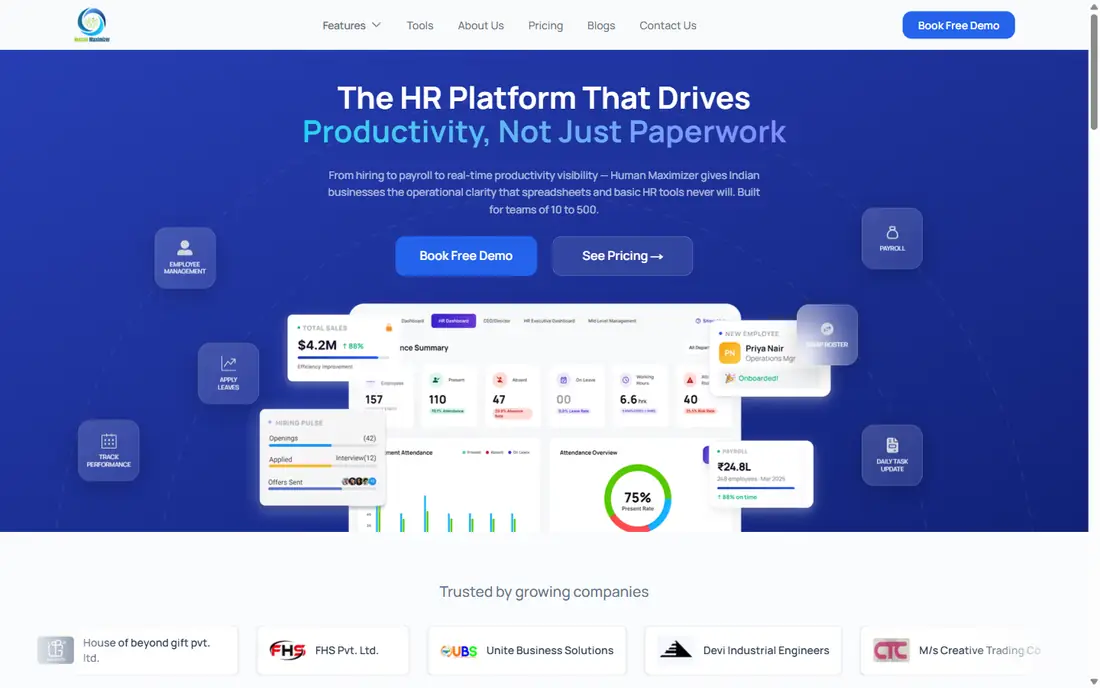
    Razor Infotech's HRMS product, sold to businesses on subscription and competing with greytHR, Keka and Zoho People. Covers payroll, attendance, leave, performance and internal communication — on the web, in a React Native mobile app and on a Kotlin face-attendance kiosk. I built payroll and the major modules, plus four of the apps that feed it as the sole developer.

    • React
    • Node.js
    • Express
    • MongoDB
    • Socket.IO
    • WebRTC
    • Tailwind CSS
    • React Native
    • Kotlin

    Key results

    • Payroll compliant with TDS, PF and ESIC
    • Real-time chat with WebRTC voice and video
    • Live company feed over Socket.IO
    • Mobile app and face kiosk built single-handedly, both on Google Play

    The problem

    Growing businesses run HR across disconnected tools — spreadsheets for payroll, a biometric box for attendance, WhatsApp for everything else. Nothing reconciles, statutory payroll is calculated by hand, and there is no reliable answer to how work is actually distributed across a team. The established products in this space — greytHR, Keka, Zoho People — set the bar Razor Infotech built against.

    My role

    Human Maximizer is Razor Infotech's product, and I work on it as a developer on the platform team, shipping to paying subscribers on a release cadence. The web application is a team build, but I built payroll and the platform's other major modules myself, along with the apps that feed it, each as the sole developer: the mobile app, the Productivity Lens agent, the face-attendance kiosk and the field-worker app.

    Approach

    1. The web app is MERN with Tailwind CSS. I built the employee profile and attendance modules, leave and ticketing, company settings, and POSH case management — the operational core that every other feature reads from.

    2. Communication had to live inside the platform rather than beside it, so I built two real-time systems: an internal company feed in the style of X/Twitter over Socket.IO, and a WhatsApp-style chat with one-to-one voice and video calling over WebRTC.

    3. Performance management is configurable rather than fixed. Admins define KPIs against company goals, assign goals with deadlines, and rate people on achievement, timeliness and behaviour, so the same system fits companies that measure very different things.

    4. Payroll is the part with no room for approximation. It runs fully automated against statutory rules — TDS, PF and ESIC — with compliance checks and audit trails behind every figure.

    5. The mobile app — sole developer. The companion iOS and Android app in React Native, published on the Google Play Store. Check-in is a two-step verification — the phone's position against the company's geofence, then a live face match — and leave, payroll, the company feed and team chat with voice and video calls live in the same app, in English or Hindi.

    6. The face-attendance kiosk — sole developer. A native Kotlin app, published on Google Play, that turns any Android phone or tablet at the office gate into a touchless attendance terminal. ML Kit checks for a real face on the device before anything is uploaded for the AWS Rekognition match, and punches taken during an internet outage are saved to disk and sync on their own when the connection returns.

    Outcome

    Human Maximizer ships as a subscription product to paying business customers, replacing the spreadsheet-and-biometric-box arrangement with a single system that reconciles attendance, leave, performance and payroll.

    More screens

    Live – Human Maximizer (opens in a new tab)
  • Productivity Lens — Activity Agent: screenshot
    ProfessionalSole developer

    Productivity Lens

    Activity Agent

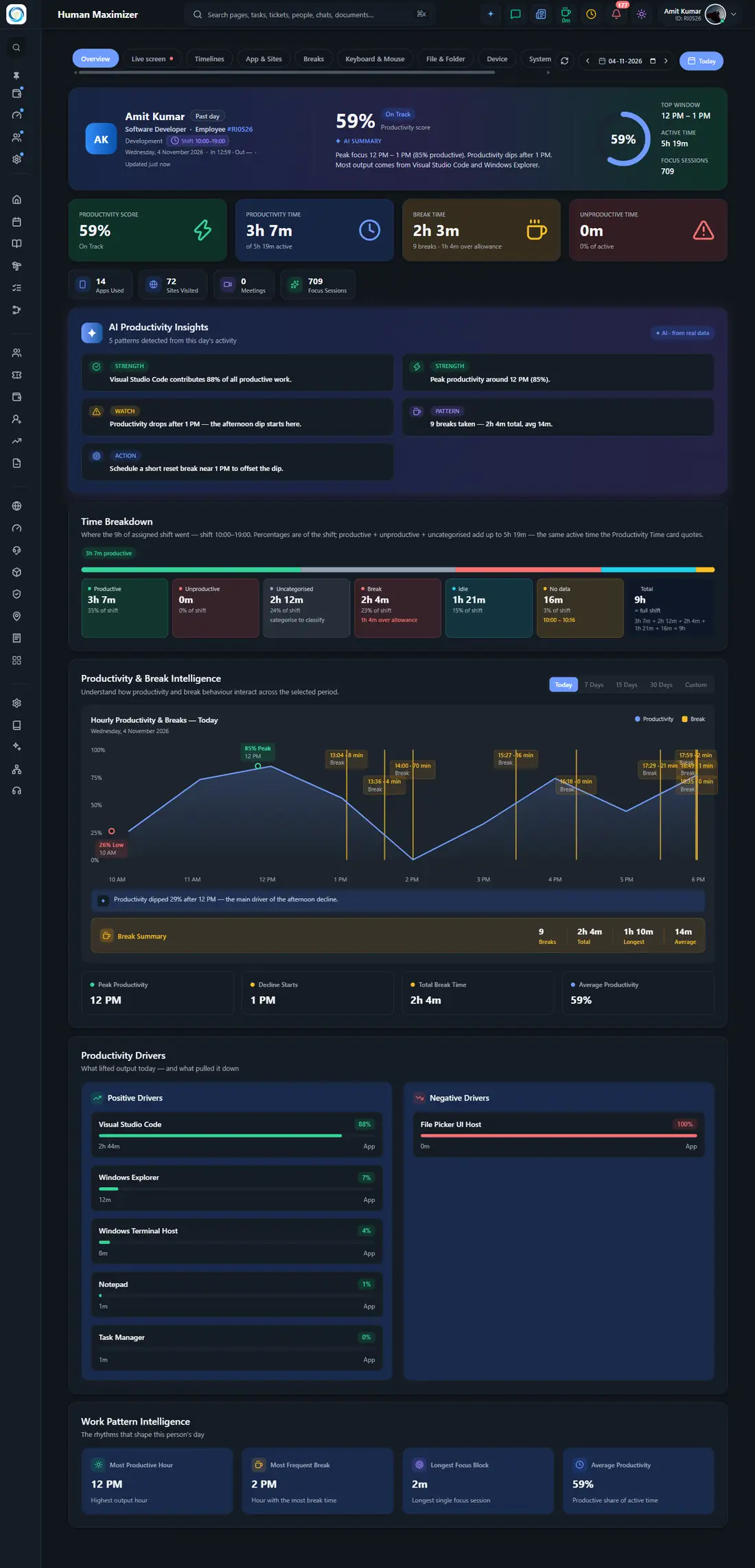
    A Windows agent in Rust, with an Android version in Kotlin, that measures how working time is actually spent — applications and websites used, idle time, and automatic break detection — and syncs it into the HRMS for performance reporting. Built end to end as the sole developer.

    • Rust
    • Windows APIs
    • SQLite
    • Kotlin
    • Node.js
    • MongoDB
    Productivity Lens — Activity Agent: screenshot (view full size)
    ProfessionalSole developer

    Productivity Lens

    Activity Agent

    Internal product

    A Windows agent in Rust, with an Android version in Kotlin, that measures how working time is actually spent — applications and websites used, idle time, and automatic break detection — and syncs it into the HRMS for performance reporting. Built end to end as the sole developer.

    • Rust
    • Windows APIs
    • SQLite
    • Kotlin
    • Node.js
    • MongoDB

    Key results

    • Single Rust binary — no Electron, no service
    • Offline-safe SQLite event buffer
    • Automatic break detection
    • Windows and Android agents

    The problem

    Performance reviews were arguing from memory. Attendance said someone was present for eight hours, but nothing said how those hours were distributed, and managers had no evidence beyond impressions.

    My role

    I built it on my own: the Rust desktop agent, its Android counterpart in Kotlin, and the pipeline that brings their data into the central platform.

    Approach

    1. One Rust binary does the whole job. Native Windows watchers track the active window, browser URLs, idle time, screen lock and USB events, alongside a tray icon and a local setup page — one process, with no Electron shell, browser extension or Windows service to break.

    2. Events are written to a SQLite buffer on disk before anything is sent, and uploaded in batches every 60 seconds, so a laptop that goes offline, sleeps or reboots loses nothing.

    3. Breaks are detected rather than declared: screen lock, system lock, or more than five minutes of inactivity are logged automatically, so nobody has to remember to clock out for lunch.

    4. It keeps itself running on machines nobody is watching: an autostart entry, a supervisor task that checks every five minutes, a single-instance lock, and an admin password to quit. New versions ship as installers uploaded through the dashboard.

    5. Every part of what is tracked is governed by company settings rather than hardcoded, and the Android agent reports to the same endpoints, so phone-based staff land in the same performance and KPI reporting as everyone else.

    Outcome

    Managers review performance against recorded activity instead of impressions, and the productivity data sits alongside attendance and KPIs in a single system rather than a separate tool.

    More screens

    Internal product

    Internal product
  • HCM Field Worker — Live Location App: screenshot
    ProfessionalSole developer

    HCM Field Worker

    Live Location App

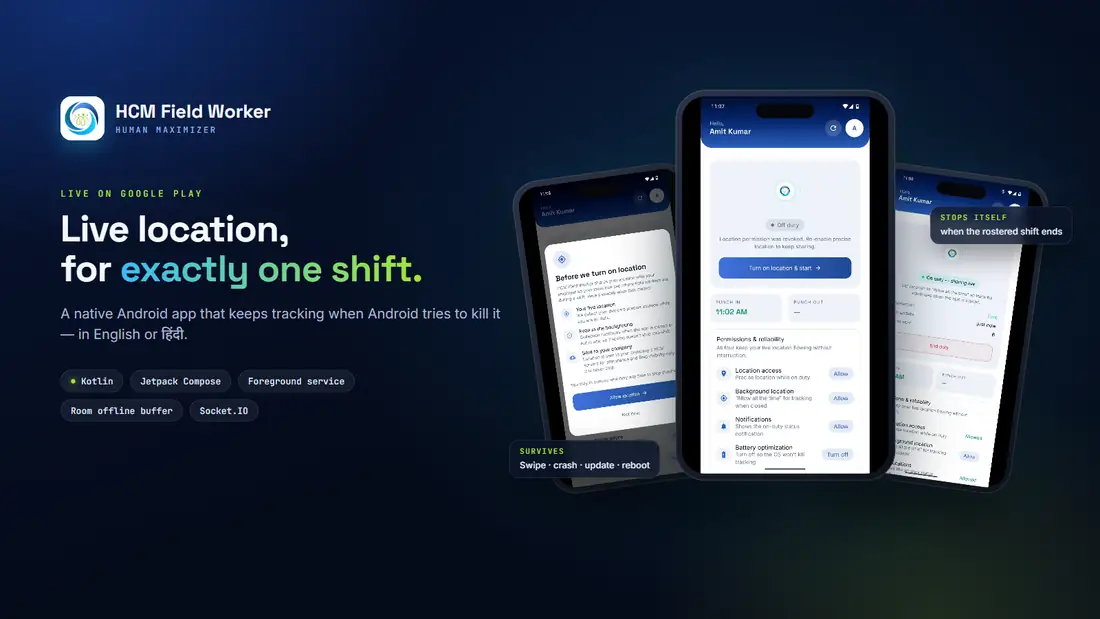
    A native Android app, built independently in Kotlin and published on Google Play, that streams a field worker's live location for exactly the length of their shift — in English or Hindi — and keeps running when Android tries to kill it.

    • Kotlin
    • Jetpack Compose
    • Room
    • Socket.IO
    • Android
    • Node.js
    • MongoDB
    HCM Field Worker — Live Location App: screenshot (view full size)
    ProfessionalSole developer

    HCM Field Worker

    Live Location App

    A native Android app, built independently in Kotlin and published on Google Play, that streams a field worker's live location for exactly the length of their shift — in English or Hindi — and keeps running when Android tries to kill it.

    • Kotlin
    • Jetpack Compose
    • Room
    • Socket.IO
    • Android
    • Node.js
    • MongoDB

    Key results

    • Survives swipe, crash, update and reboot
    • Tracking bounded to the rostered shift
    • Offline buffer with batch upload
    • English and Hindi

    The problem

    Field tracking used to live inside the main React Native app, and it was unreliable: Android suspends the JavaScript runtime in the background, and Doze, battery savers and manufacturers' task killers stopped tracking mid-shift. Managers saw gaps exactly where they needed a trail.

    My role

    I built the app on my own and published it on Google Play, along with the backend changes it needed and the trip-history timeline on the web dashboard.

    Approach

    1. A separate native Kotlin app with a location foreground service, so there is no JavaScript bridge to die. The main app keeps attendance and leave; this one does one job. It signs in with its own session slot, so it never logs the employee out of the main app.

    2. Tracking follows the shift, not the punch-out. It starts at the day's first punch-in and stops when that day's rostered shift ends, ignoring the check-outs a gate machine records every time someone steps outside. Night shifts and days without a shift are handled, and it stops on time even with no internet.

    3. It comes back on its own after everything Android allows: being swiped away, a process kill, a crash, an app update or a reboot — each verified to resume within seconds. After a restart it reports the reason to the dashboard, and it walks the worker through battery and auto-start settings on Xiaomi, Oppo, Vivo, Samsung and other phones.

    4. Fixes go out live over Socket.IO with server acknowledgement and an HTTP fallback. Without signal they wait in a local Room database and upload in batches when the network returns.

    5. On the server, a teleport filter rejects a single wild fix but re-anchors after three agreeing ones, and trip history is rebuilt as one timeline of stops, trips, GPS gaps and punches.

    Outcome

    Managers see a continuous trail for each field worker across the whole shift, and tracking ends by itself when the shift does, so nobody is tracked off the clock.

    More screens

    Google Play – HCM Field Worker (opens in a new tab)
  • Margo GPS — Fleet Tracking Platform: screenshot
    FreelanceSole developer

    Margo GPS

    Fleet Tracking Platform

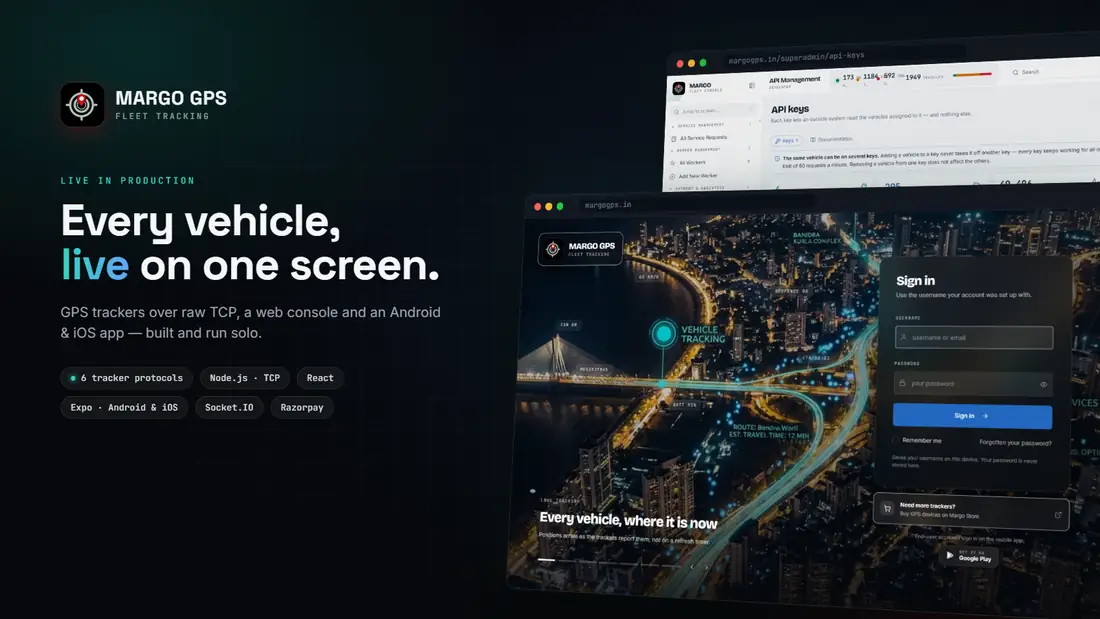
    A live GPS fleet-tracking platform for Margo Logistics that I built and run as the sole developer — live in the market with 5,000+ users, 1,900+ vehicles and 1M+ location updates captured every day. One TCP server, a web dashboard and an Android and iOS app, with live tracking, theft alerts, remote engine stop and trip replay with fuel cost.

    • Node.js
    • TCP
    • Express
    • MongoDB
    • Socket.IO
    • React
    • React Native
    • Expo
    • Android
    • iOS
    • Razorpay
    • FCM & APNs
    Margo GPS — Fleet Tracking Platform: screenshot (view full size)
    FreelanceSole developer

    Margo GPS

    Fleet Tracking Platform

    A live GPS fleet-tracking platform for Margo Logistics that I built and run as the sole developer — live in the market with 5,000+ users, 1,900+ vehicles and 1M+ location updates captured every day. One TCP server, a web dashboard and an Android and iOS app, with live tracking, theft alerts, remote engine stop and trip replay with fuel cost.

    • Node.js
    • TCP
    • Express
    • MongoDB
    • Socket.IO
    • React
    • React Native
    • Expo
    • Android
    • iOS
    • Razorpay
    • FCM & APNs

    Key results

    • 5,000+ users and 1,900+ vehicles
    • 1M+ location updates captured every day
    • Sole developer, from first commit to production
    • Six GPS protocol families on one TCP server
    • Live on Google Play and the App Store
    • Overspeed pushes cut to one per episode — 68% had been repeats

    The problem

    Margo Logistics sells and installs GPS trackers for vehicle owners, fleet operators, schools and field sales teams in India. The hardware comes from several manufacturers, and each speaks its own binary protocol over raw TCP. They needed one platform that understood all of it and turned a stream of coordinates into something an owner could act on from their phone.

    My role

    I built the whole platform on my own, from first commit to production — the device server, the web dashboard for every role from super admin to individual vehicle owner, and the mobile app published on both app stores — and I run it in production single-handedly: deployments, the database, monitoring and every fix.

    Approach

    1. Trackers connect over TCP to a Node.js server that frames and decodes six protocol families — JT808, Concox 4G, ALITE, BR05, V5 and S15 — and normalises every fix into one location model. Ingest runs as its own service, separate from the HTTP API, so a burst of device traffic never slows the dashboard.

    2. Raw GPS jumps from fix to fix, so the map does not show it raw. Web and mobile render every vehicle on a shared timeline 18 seconds behind real time, interpolating between buffered fixes and snapping the path to the road, so a truck glides along the street instead of teleporting across blocks — identically on every screen.

    3. Live position drives the features owners pay for: a theft alert that arms around a parked vehicle and fires a push when it leaves a 50 m radius, confirmed across consecutive fixes to ignore GPS drift; remote engine stop through a queued relay command; and trip replay with distance, stops and fuel cost in rupees.

    4. The same platform runs separate products on top of the core: school bus routes with school and driver accounts, attendance for field sales teams, Razorpay subscriptions with invoicing, shareable public tracking links, and a keyed external API with generated documentation for partners.

    5. Alerts had to be trusted to be read. A flat cooldown was sending a speeding push every two minutes for as long as a vehicle stayed over the limit, so I reworked overspeed alerts around episodes — one alert when it starts, then a reminder every 15 minutes while it lasts — and discarded physically impossible readings as GPS glitches.

    6. Running it at that volume is part of the job, and I do it alone: deployments, a MongoDB replica set with its own recovery runbook, indexes tuned for location lookups by device and time, and automatic expiry on raw packets so storage does not grow without limit.

    Outcome

    Margo GPS is live in the market at margogps.in, with 5,000+ users, 1,900+ vehicles and 1M+ location updates captured and stored every day, and the mobile app live on the Google Play Store and the App Store. Owners watch their vehicles move smoothly in real time, get an alert the moment a parked vehicle moves, and can stop the engine from the same screen.

    Under the hood

    Device server · TCP
    A Node.js TCP server in its own process. A stream framer splits raw bytes into packets, six protocol decoders (JT808, Concox 4G, ALITE, BR05, V5, S15) are picked per IMEI, and a relay command queue sends engine cut and restore commands back to the tracker and checks each reply.
    API & real time
    Express 5 + Mongoose 8, kept separate from ingest so device traffic never slows the dashboard. Socket.IO pushes positions into rooms per user, per selected vehicle and per public share link. JWT auth with role-scoped routes for super admin, admin, user, school and sales roles; Joi and express-validator on every input.
    Data · MongoDB
    A MongoDB replica set holding locations, heartbeats, alarm packets and engine events. Compound indexes on IMEI + time for history queries, TTL expiry on raw packets, and a cron roll-up that turns raw fixes into daily stats for the dashboards.
    Web dashboard
    React 18 + Vite 7, Tailwind with shadcn/Radix UI. TanStack Query for server state and Zustand for client state. Maps on Google Maps, Ola Maps, Leaflet and MapLibre; geofences drawn with Leaflet-Geoman and computed with Turf; forms on React Hook Form + Zod; charts in Recharts and Chart.js.
    Mobile · Android & iOS
    Expo SDK 54 / React Native 0.81 — one codebase for Android and iOS. EAS Build and Submit to Google Play and the App Store, and EAS over-the-air updates so fixes ship without a store review. react-native-maps with marker clustering, Reanimated 4, Gorhom bottom sheets, FlashList and Zustand.
    Payments · Razorpay
    Device plans sold as Razorpay subscriptions with checkout inside the app. Webhooks verified by signature (payment.captured, payment.failed, subscription.activated, order.paid), tax invoices generated as PDFs with PDFKit and Puppeteer, and cron + SMS reminders before renewal.
    Notifications
    Push to Android through Firebase Cloud Messaging and to iOS directly over APNs, plus email through Nodemailer and SMS. Theft, geofence and overspeed alerts are throttled per episode so owners keep reading them.
    Partner API
    A keyed external REST API with a WebSocket feed: each key is scoped to its own vehicles, limited to 60 requests a minute, and returns one response envelope — with generated PDF docs. 49,000+ requests served to partners so far.
    Running it in production
    Deployments, the replica set and its recovery runbook, crash reports collected from the apps, and server logs streamed live to the super-admin console over Socket.IO. Media is stored on Cloudinary and Backblaze B2.

    More screens

    Live – Margo GPS (opens in a new tab)
  • Movie & TV Database: screenshot
    Personal

    Movie & TV Database

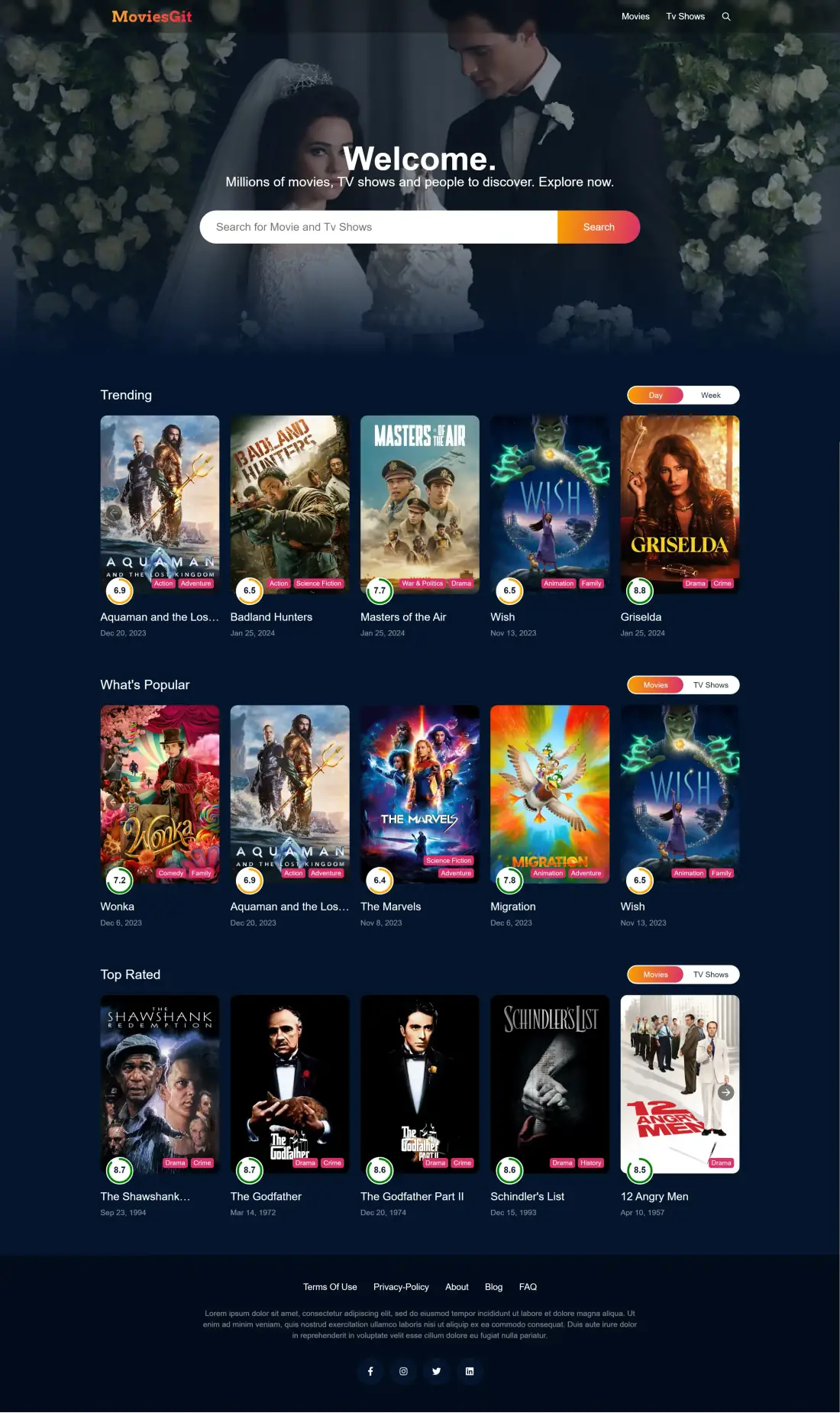
    Browse trending films and shows with ratings, cast and details from the TMDB API. Built to work through Redux Toolkit against a real paginated data source.

    • React
    • Redux Toolkit
    • Sass
    • Axios
    • React Router

    Browse trending films and shows with ratings, cast and details from the TMDB API. Built to work through Redux Toolkit against a real paginated data source.

    • React
    • Redux Toolkit
    • Sass
    • Axios
    • React Router
    Live – Movie & TV Database (opens in a new tab)Source – Movie & TV Database (opens in a new tab)
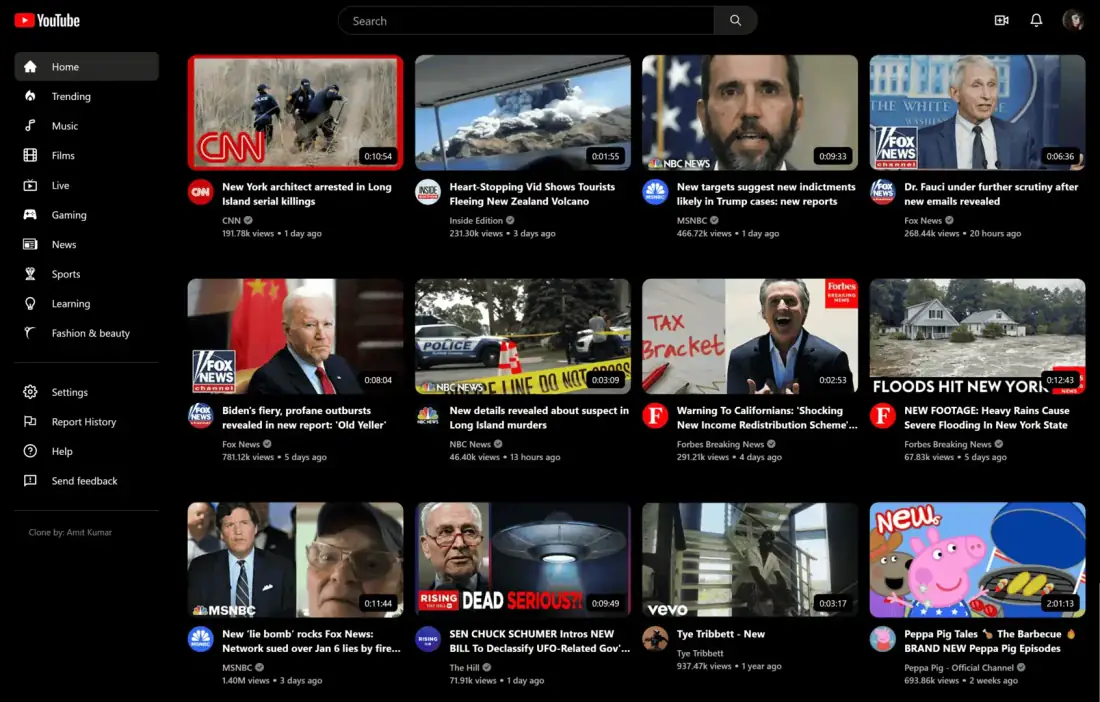
  • YouTube Clone: screenshot
    Personal

    YouTube Clone

    Video search and playback against the YouTube Data API, with channel pages, related videos and a responsive player layout.

    • React
    • Redux
    • Tailwind CSS
    • Axios
    • React Router

    Video search and playback against the YouTube Data API, with channel pages, related videos and a responsive player layout.

    • React
    • Redux
    • Tailwind CSS
    • Axios
    • React Router
    Live – YouTube Clone (opens in a new tab)Source – YouTube Clone (opens in a new tab)
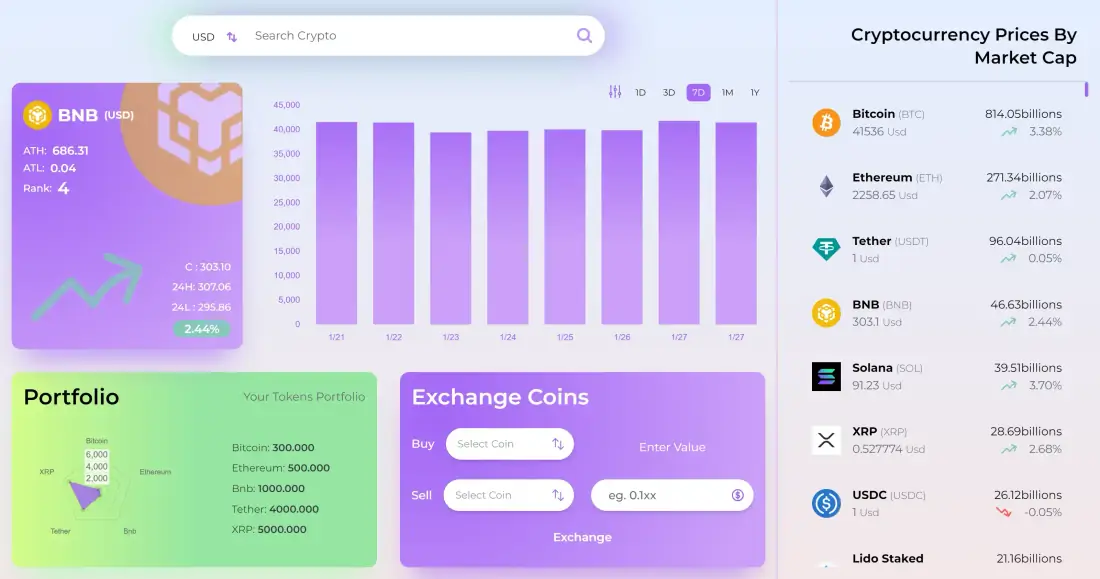
  • Cryptocurrency Dashboard: screenshot
    Personal

    Cryptocurrency Dashboard

    Live price tracking across currencies with historical charts and conversion between coins, rendering Chart.js over a polled price feed.

    • React
    • Redux Toolkit
    • Tailwind CSS
    • Chart.js
    • Axios

    Live price tracking across currencies with historical charts and conversion between coins, rendering Chart.js over a polled price feed.

    • React
    • Redux Toolkit
    • Tailwind CSS
    • Chart.js
    • Axios
    Live – Cryptocurrency Dashboard (opens in a new tab)Source – Cryptocurrency Dashboard (opens in a new tab)
  • Myntra Clone: screenshot
    Personal

    Myntra Clone

    Fashion storefront with category browsing, filtering and a cart flow. A team build in vanilla JavaScript — no framework.

    • JavaScript
    • HTML
    • CSS
    • REST API

    Fashion storefront with category browsing, filtering and a cart flow. A team build in vanilla JavaScript — no framework.

    • JavaScript
    • HTML
    • CSS
    • REST API
    Live – Myntra Clone (opens in a new tab)
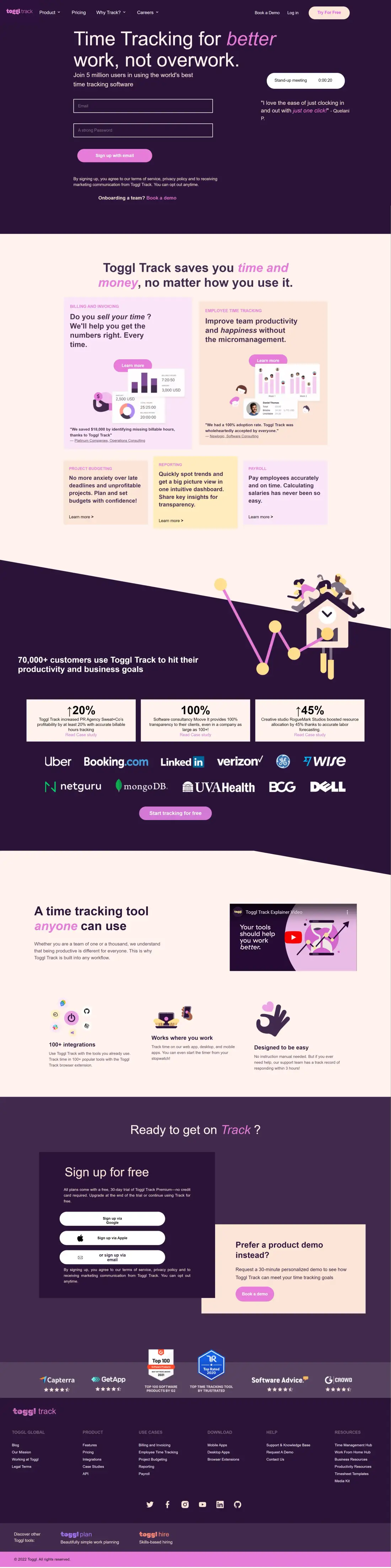
  • Toggl Track Clone: screenshot
    Personal

    Toggl Track Clone

    Time tracking against projects with reporting charts over the recorded entries. A team build in vanilla JavaScript.

    • JavaScript
    • HTML
    • CSS
    • Chart.js

    Time tracking against projects with reporting charts over the recorded entries. A team build in vanilla JavaScript.

    • JavaScript
    • HTML
    • CSS
    • Chart.js
    Live – Toggl Track Clone (opens in a new tab)Source – Toggl Track Clone (opens in a new tab)

cat education.md

Education

Where I learned to build software, and the degree before it.

Degrees

  1. May 2022 – Apr 2023

    MERN Full Stack Web Development

    Masai, Remote

  2. Jul 2017 – Aug 2020

    Bachelor of Business Administration (BBA)

    Bharati Vidyapeeth Deemed University, New Delhi

Languages

  • English
  • Hindi

./contact.sh

Say Hello

Hiring for a full stack or mobile role? Send me a message here, or reach me directly by email, phone or LinkedIn.

Send a message

All fields are required.